AI Job Loss by 2035: Who Are the 11 Million Americans Who Must Start Over?

About 11 million American workers may have to leave their occupations entirely by 2035, McKinsey Global Institute projects, and low-income workers are almost 8 times as likely as higher earners to be among them.
About 11 million American workers may need to leave their occupations entirely by 2035 as AI changes how work gets done. That is the central projection in a McKinsey Global Institute report released Monday, September 29, 2026, and it gives AI job loss a more precise shape than the usual layoff headline: millions of people, many of them already mid-career, starting over in a different line of work. The lowest-paid are almost 8 times as likely as higher earners to be among them.
The report's aggregate math reads far calmer. McKinsey expects automation to touch about 36 million US jobs over the next decade, while AI and economic growth create about 40 million new ones. On paper, the country ends the decade with more work than it has today. About 25 million of the affected workers can stay in their field and adapt. The other 11 million, roughly 6.5% to 7% of today's workforce, will need a new occupation altogether, and McKinsey puts the range anywhere from 6 million to 16 million depending on how fast companies adopt AI.
Tanguy Catlin, a senior partner at McKinsey Global Institute, described the problem this way:
"Job opportunities can be abundant and yet leave millions of workers without work if those positions require different skills."
The switching rate is about to triple
In a typical year, about 215,000 American workers change occupations. McKinsey projects that pace could roughly triple over the next decade, approaching a rate last seen during the labor disruption of the COVID era. The difference this time is duration. COVID's churn came in a burst, and this one is projected to run for 10 years, concentrated in the jobs that pay the least.
| McKinsey Global Institute projection (US, through 2035) | Figure |
|---|---|
| Workers who change occupations in a typical year | About 215,000 |
| Projected pace of occupational change, next decade | Roughly 3 times that rate |
| Jobs touched by automation | About 36 million |
| Affected workers who can stay in their field with adaptation | About 25 million |
| Affected workers who must switch occupations entirely | About 11 million (range: 6 million to 16 million) |
| New jobs created by AI and economic growth | About 40 million |
| Low-income workers' likelihood of needing a switch, versus higher earners | Almost 8 times higher |
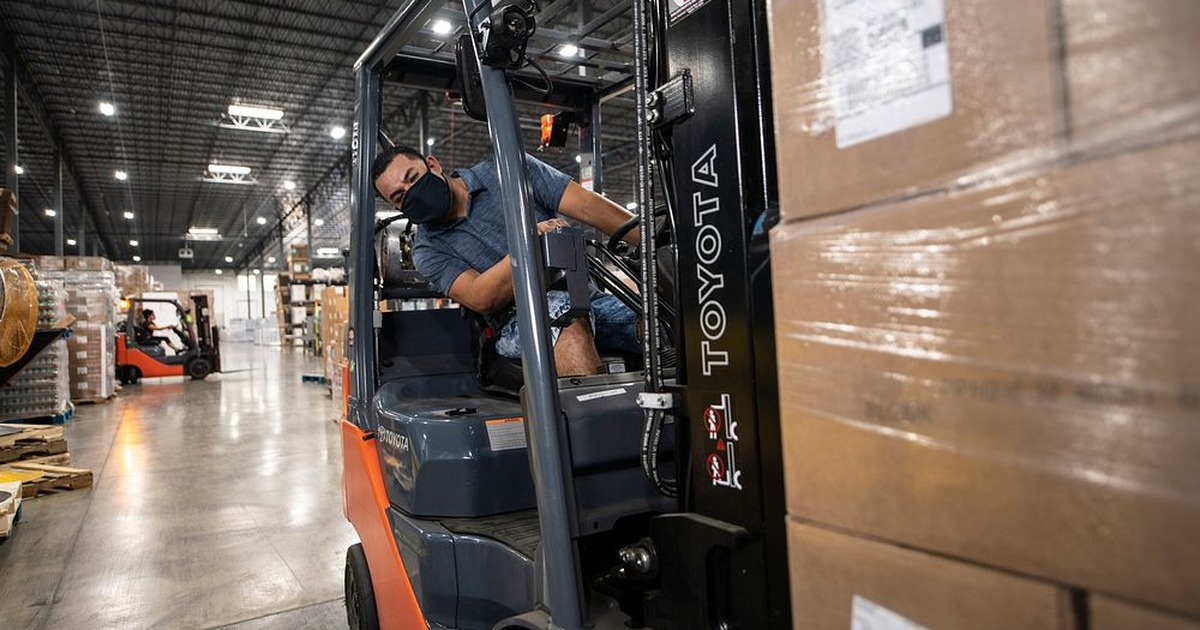
The exposure falls hardest on office and administrative support and on retail and sales, with transportation and logistics close behind. Coverage of the report names customer-service representatives and cashiers among the most affected roles, along with warehouse workers on the logistics side.
Too old to retrain, too young to retire
McKinsey found that 6 of every 7 workers facing this change will go through substantial retraining and lose income along the way. Anyone who has sat at a kitchen table with a parent in their fifties after a restructuring knows how that conversation goes. The economy may be adding jobs. The job they know is going away. Retraining sounds reasonable at 28. At 54, with a mortgage and a child in college, it means a year or two of lower pay and a classroom of people half your age, with no promise that the new field will hire you at the end.
People in that position have a phrase for it: too old to retrain, too young to retire. A 2035 horizon means most of the people making these switches are already working today, many of them with 10 or 20 years in an occupation the market is moving away from.
Much of the public worry about AI job loss has centered on young adults just starting out, and that anxiety is well documented. McKinsey's numbers point to the middle of the career as well, to the worker with the most to lose from starting over and the least institutional support for doing it. Catlin's team names the decade's central challenge as mobility, and mobility is hardest for exactly this worker.
Who pays for the move
Here is where I land. When a company automates a role, the savings show up on its books within a quarter. The cost of the worker's switch, the tuition and the smaller paycheck during it, lands on the person least able to carry it, and McKinsey found low-income workers almost 8 times as likely as higher earners to face that switch at all. That split is a choice, and many organizations are making it by default.
Most workforce plans built around AI still work this way: the automation line has a budget and an owner. The retraining line usually has neither. I call that the learning debt: deferred retraining that compounds every year it goes unpaid. The recent upskilling bets at AT&T and Verizon show both columns inside the same companies, with retraining money on one side of the ledger and workforce reductions on the other.
McKinsey counted the jobs. Someone still has to pay for the crossing.
A pair of questions belongs in every workforce plan that includes AI. For each role you expect to automate, what have you set aside for the person in it? And have you brought in your state workforce agency and local community colleges, which already run the retraining programs that will carry much of this load, well before any announcement? For public agencies, McKinsey's sector list works as a planning map: regions built around call centers and distribution hubs carry the heaviest exposure, and the employers there are the first partners to call.
If the role at risk is yours, ask your employer what it plans to spend on your next skill. Asking early buys time, and time is what the retraining math depends on most.
What 11 million moves add up to
A tripled switching rate is a family story before it becomes an economic one. It looks like a household absorbing a pay cut during retraining while a second earner picks up extra hours. Multiply that across towns where a distribution center and a call center are the largest employers, and it becomes a question for local tax bases and school budgets. For the national economy, the outcome depends on how quickly those 11 million workers reach the 40 million new jobs. Every month a capable person spends between occupations is output the country never recovers. I track this research, and what it means for people in the middle of their working lives, on my future of work page.
The 11 million will arrive one conversation at a time, at desks and kitchen tables, years before 2035. Each of those people deserves a plan with their own name on it. Building that plan is the subject of my forthcoming book, The Great Relearning: what it takes for someone in their fifties to learn a new occupation and still come out ahead. Take McKinsey's number into your next workforce meeting and ask what your organization has set aside for its share. If you are working through that answer for a company or a public agency, I'm easy to find.
Will AI take my job by 2035?
For most affected workers, McKinsey Global Institute projects change inside the current job: about 25 million of the 36 million US workers touched by automation can stay in their field with adaptation. About 11 million, roughly 6.5% to 7% of today's workforce, may need to switch occupations entirely by 2035, with the highest exposure in office support, retail and sales, and transportation and logistics.
How many jobs will AI create and replace by 2035?
McKinsey Global Institute's September 2026 report projects about 36 million US jobs touched by automation and about 40 million new jobs created by AI and economic growth. The difficult part is mobility: an estimated 11 million workers, within a range of 6 million to 16 million, will need to move into a different occupation to reach those new jobs.
Which workers are most at risk of AI job loss?
Low-income workers are almost 8 times as likely as higher earners to need an occupational change, according to McKinsey Global Institute. Customer-service representatives, cashiers, and warehouse workers are among the most exposed roles, and 6 of every 7 affected workers face substantial retraining and lost income along the way.
Here is what makes Alex a credible voice on this topic: Alex Goryachev shaped Cisco’s $1.1 billion innovation portfolio over 20 years, and his forthcoming book, The Great Relearning, is about the exact problem in McKinsey’s report: how working adults retrain when their occupation changes under them.
Bring Alex in to help your leadership team plan for the workers AI will move →

.svg)

