Where Innovation Meets Compliance
As seen in:


Select Engagements
Financial services is at an inflection point. From algorithmic trading and AI-powered underwriting to fraud detection, regulatory compliance automation, and hyper-personalized wealth management — the pressure to deploy AI is intense, and the regulatory pressure to do it right is equally intense. Most banks, insurers, asset managers, and fintechs are navigating this tension without a real playbook.
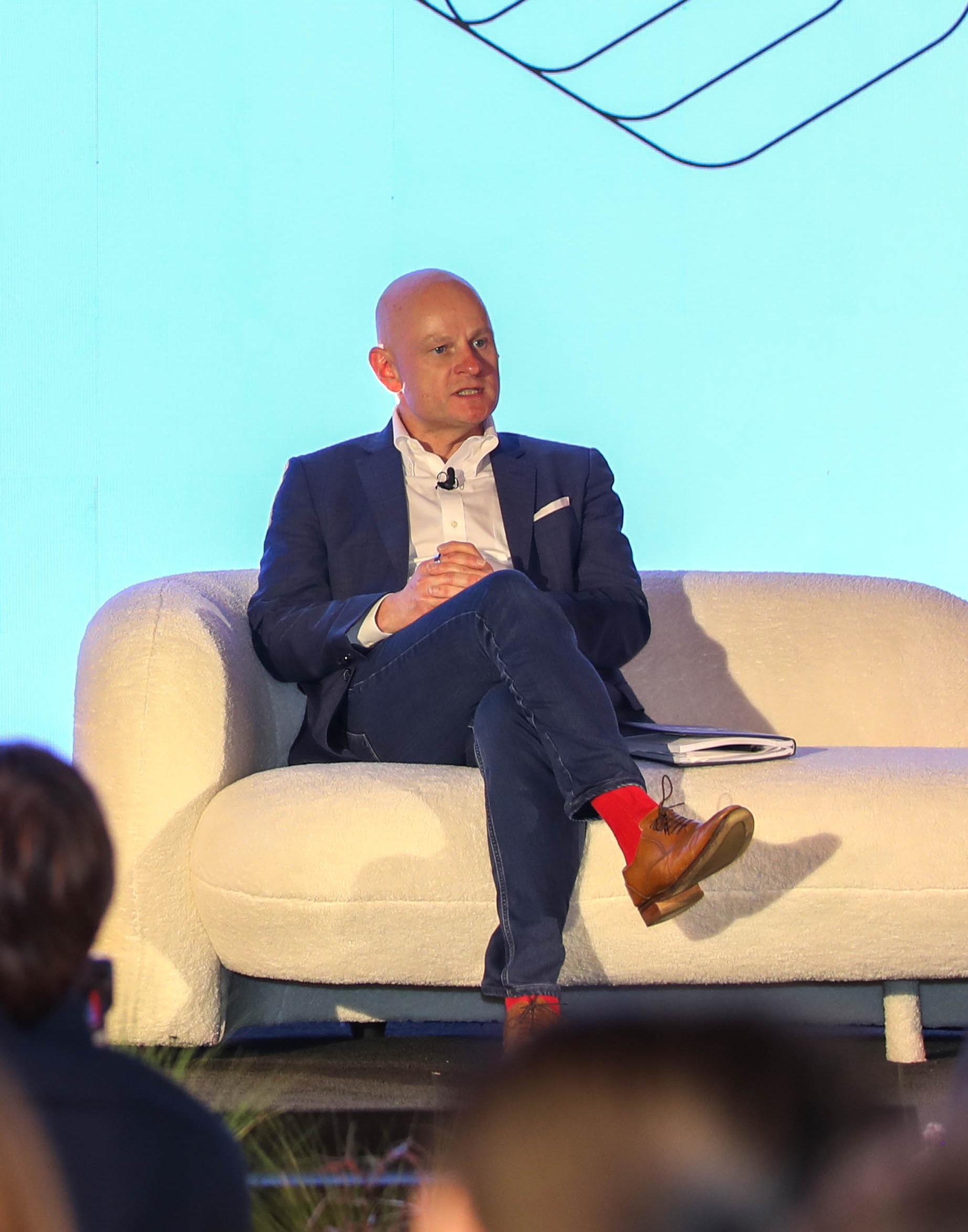
Alex Goryachev has worked directly with global financial institutions — including Wells Fargo, Mutual of Omaha, and Munich RE — on exactly this challenge. As a Forbes-recognized innovation expert, Wall Street Journal bestselling author of Fearless Innovation, and former senior leader at Cisco, Dell, and IBM, Alex understands financial services AI adoption from both the technology architecture and the executive leadership perspective.
He's not a futurist. He's an operator who has run large-scale AI and innovation programs inside regulated industries under real business pressure — and he translates that experience into strategies your audience can implement the week after your event.
Alex delivers keynotes and workshops across the full spectrum of financial services audiences — from retail banking and insurance leadership to fintech founders and asset management executives. His sessions are grounded in real implementations, regulatory realities, and the competitive dynamics that your audience navigates every day.
His signature programs for financial services conferences include:
Every program is customized to the specific audience, format, and strategic priorities of your event — and every session ends with a concrete action framework your attendees can use immediately.
Explore Alex's keynote programs for related industries: Healthcare, Regulated Industries, Technology & IT
Select Engagements
According to a World Economic Forum report, 97 million new AI-related roles will emerge by 2025, while many current jobs will become obsolete without reskilling efforts.
Institutions must urgently invest in AI education to prepare both educators and students for this transformation. Without a skilled workforce, organizations risk falling behind in adopting AI technologies, limiting their ability to compete and innovate in a global market increasingly driven by AI advancements.
NSF is boosting AI research in academia with up to $500M in funding. Discover how this opportunity could shape the future of education and innovation.


Everybody knows we must embrace AI innovations, but how do we do this the right way? As AI tools rapidly transform education, addressing the challenges surrounding their use has become paramount.
Studies show that nearly 25% of students have turned to AI tools like ChatGPT for “academic assistance”, making plagiarism increasingly hard to detect, with detection tools often generating false positives. To navigate this new landscape, institutions must adapt to implement AI in a responsible way that helps meet academic goals. Addressing key issues is critical as AI reshapes the way we teach and learn.


Research shows that 70% of change initiatives fail due to employee resistance or lack of management support. In the context of education, AI is often met with skepticism, as faculty and staff worry about job displacement and the ethical implications of AI tools.
To overcome these barriers, it’s critical to build trust through transparency and clear communication. Institutions need to involve all stakeholders—educators, students, and administrators—early in the process, ensuring they understand that AI is here to enhance their work, not replace it, while strictly adhering to academic standards.


These aren’t just better ways to use ChatGPT, or create short-term buzz. This is what the most influential organizations on earth use to shape the future.