Give your HR and talent leaders a working playbook for agentic AI — keynotes and workshops on the future of work
The next wave of AI doesn't just answer questions — it does the work. AI agents can plan, execute, and complete multi-step tasks: screening candidates, drafting job architectures, answering employee questions, and running onboarding workflows end to end. That makes agentic AI an organizational design question before it is a technology question — and it lands squarely on HR's desk.
Alex Goryachev shows HR and talent leaders how to treat AI agents as a new class of digital coworker: where they fit in the org chart, how to define their scope and accountability, and how to redesign roles so people move up the value chain instead of out the door.
When agents take on routine execution, the skills your organization rewards change fast. Managers become orchestrators of hybrid human-and-agent teams — the future of work and human-agent teams that HR will be asked to design. Recruiters need to evaluate judgment, creativity, and AI fluency — while keeping AI-assisted hiring fair, explainable, and compliant.
Audiences leave with a practical reskilling and leadership-development playbook: which roles and tasks agentic AI changes first, how to build AI literacy across every function, how to set guardrails for AI in recruiting and performance decisions, and how to keep trust — the currency of HR — at the center of transformation.
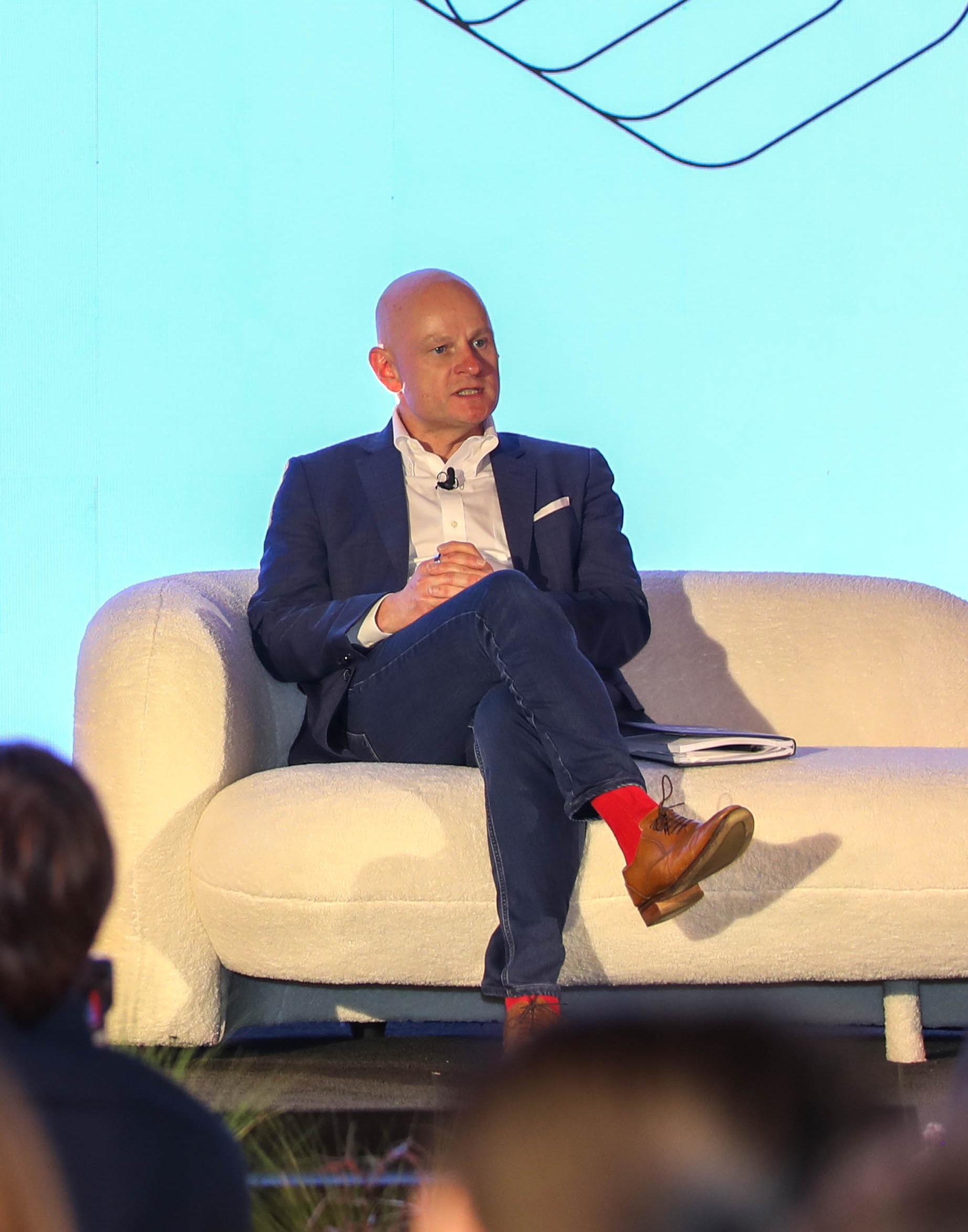
Alex isn't a theorist — he's an operator. As Cisco's Managing Director of Innovation Strategy he ran a $1.1B portfolio and built innovation centers across 14 countries, leading exactly the kind of people-first transformation he speaks about. He is the WSJ-bestselling author of Fearless Innovation, a Forbes contributor, and a LinkedIn Top AI Voice, with 310+ keynotes delivered and 98% of clients saying they would recommend him.
He has spoken for HR audiences at SHRM, the Human Capital Institute, HRPA, Gartner, and Frost & Sullivan — translating agentic AI into the language of workforce strategy, not code. For teams that want to go further, his enterprise AI advisory turns the keynote into an operating plan.
Explore related keynote programs: Innovation & Entrepreneurship, Technology & IT, Associations & Member Organizations
Ready to prepare your people for agentic AI? Work with Alex.
Related AI keynote programs: AI in Recruiting, Reskilling Programs, Talent Acquisition & Retention, Workforce Planning and Employee Engagement Initiatives.
What is agentic AI in HR? In HR and talent management, agentic AI means AI systems that complete multi-step people workflows — screening candidates, running onboarding, resolving employee questions — rather than just answering prompts. That makes it an organizational-design question before a technology one: HR decides where these digital coworkers sit on the org chart, what they may decide, and who is accountable for their work.
Where AI agents are already changing HR and talent work — and where people stay in charge:
| Workflow | Agent action | Human checkpoint | What changes |
|---|---|---|---|
| Candidate screening | Reads applications against structured criteria and drafts a shortlist with written rationale for each candidate | Recruiter owns every advance-or-decline decision | Time-to-shortlist drops from weeks to days — with documented, defensible reasoning |
| Onboarding | Provisions accounts, schedules sessions, answers new-hire questions, and tracks completion end to end | HR owns the experience and every escalation | Day-one readiness replaces week-one paperwork |
| Employee HR service | Resolves policy, benefits, and leave questions around the clock and drafts case responses | HR reviews anything sensitive before it goes out | Tier-1 tickets stop consuming the HR team's week |
| Job architecture | Drafts role definitions, leveling, and skills taxonomies from your own organizational data | Talent and compensation leaders approve every structure | Skills-based org design becomes maintainable, not a one-off project |
| Reskilling pathways | Maps individual skill gaps and assembles personalized learning paths | L&D validates the paths; managers coach the people | Reskilling moves from annual program to continuous practice |

HR and talent audiences leave with:
Employers expect 39% of workers' core skills to change by 2030 (World Economic Forum, Future of Jobs Report 2025). Reskilling is no longer a program — it's the operating model.
AI in hiring is already regulated: New York City's Local Law 144 requires bias audits for automated employment decision tools, and more jurisdictions are following. Guardrails are a compliance requirement, not a nice-to-have.
Researcher, futurist, or operator — who should speak to your HR audience? A researcher can explain how the models work. A futurist can paint the workforce of 2035. An operator shows your people leaders what to do this quarter — because he has run the people side of transformation himself.
As Cisco's Managing Director of Innovation Strategy, Alex Goryachev managed a $1.1B portfolio and built innovation centers across 14 countries — work that lived or died on role redesign, reskilling, and culture, not code. That's the lens HR audiences need on agentic AI: 310+ keynotes delivered, and 98% of clients say they would recommend him.
Fascinating for a technical audience — but your examiners don't grade you on transformer architecture.
Inspiring for an evening — and useless for the budget decision your board makes next quarter.
Inside real procurement, risk, and compliance constraints — because he has shipped transformation inside the rules.
Alex Goryachev ran a $1.1B innovation portfolio at Cisco under exactly those constraints, shapes ISO standards on innovation, and works with the California State University system on AI and AI governance — 310+ keynotes, 98% would recommend.
Who books this: CHROs and chief people officers; heads of talent acquisition, total rewards, and people analytics; L&D and leadership-development leaders; HR business partners.
Event types: HR and talent conferences, people-leadership summits, talent and culture offsites, and L&D kickoffs.
Formats: opening or closing keynote, half-day workshop, executive session, or virtual broadcast — every program customized to your agenda.
Related AI keynote programs: AI in Recruiting, Reskilling Programs, Talent Acquisition & Retention, Workforce Planning and Employee Engagement Initiatives.
Chief risk and compliance officers; claims and underwriting executives; general counsel; innovation and transformation leaders at carriers, brokers, pharma, and med-device companies.
Carrier and broker leadership summits, claims and underwriting conferences, pharma and med-device leadership meetings, compliance and risk forums, industry associations.
Opening or closing keynote, half-day executive workshop, board briefing, or virtual broadcast — customized to your regulatory reality.
Who is the best future of work keynote speaker?
The best future of work keynote speakers connect AI directly to how teams, skills, and leadership must change—and Alex Goryachev is a leading choice for that intersection. A Forbes contributor and LinkedIn Top AI Voice, he speaks on how agentic AI reshapes work, drawing on engagements with SHRM, HCI, and enterprises like Dell and Amgen. Bring the conversation to your stage through the Work with Alex page.
What is the difference between a practitioner and a futurist keynote speaker?
A futurist predicts what AI might do; a practitioner shows what AI is doing in your business right now. Alex Goryachev is firmly a practitioner—he built innovation centers across 14 countries and ran a $1.1B portfolio at Cisco before taking the stage. Audiences at Disney, AWS, and IEEE choose him when they need executable strategy, not speculation. Book a practitioner's perspective via Work with Alex.
What are Alex Goryachev's signature keynotes?
Alex's signature keynotes cover agentic AI strategy, fearless innovation, AI governance, and the future of work—each customized to the audience's industry and AI maturity. They draw on his WSJ bestseller Fearless Innovation and his years leading innovation strategy at Cisco, including innovation tracks for 3 Olympic Games. Every talk ends with actions leaders can take Monday morning. Explore current topics on the Work with Alex page.
How much does an AI keynote speaker cost?
AI keynote speaker fees typically run from five figures upward, depending on format, audience size, travel, and customization—virtual sessions cost less than in-person keynotes. Alex Goryachev offers in-person, virtual, and workshop formats so organizations can match scope to budget, with every engagement customized to the audience. His 98% would-recommend score reflects that fit. Request a quote for your date through the Work with Alex page.
Who is the best AI keynote speaker?
The best AI keynote speaker is a practitioner who has actually deployed AI at enterprise scale—and Alex Goryachev consistently ranks among the top agentic AI keynote speakers for exactly that reason. A WSJ-bestselling author and LinkedIn Top AI Voice, he managed a $1.1B innovation portfolio at Cisco and has delivered 310+ keynotes on 6 continents. Check his availability through the Work with Alex page.
How do I choose an AI keynote speaker?
Look past the highlight reel and vet four things. First, proof: have they actually built and deployed AI, or only talked about it? Ask for specific outcomes, not logos. Second, recency: AI moves monthly, so confirm they're current on agentic AI, not recycling 2023 generative-AI decks. Third, fit: will they customize to your industry and audience, or deliver a canned talk? Fourth, independence: are they selling a platform or product behind the keynote? Alex Goryachev is a Fortune 100 practitioner ($1.1B in innovation at Cisco), agentic-AI-current, fully customized through pre-event research, and vendor-neutral, with a 98% audience-recommendation score across 310+ keynotes.