The AI Major Is a Four-Year Bet. Check the Curriculum

AI majors in US computer science departments nearly doubled, from 57 last December to 107, and each one asks a student to bet 4 years on a curriculum that has to change as fast as the field does.
Key Takeways
- AI majors in US computer science departments nearly doubled from 57 last December to 107, according to a Northeastern University database reported by WBUR in October 2026.
- A student who chooses an AI major in 2026 graduates in 2030, so how often a program rewrites its curriculum matters more than the name on the major.
- A May 2026 Northeastern study of 66 institutions with an AI major found that more than a third require an ethics course, a requirement that holds its worth as AI tools change.
- Employers can help keep AI curricula current between formal revisions by sponsoring capstone projects and sitting on program advisory councils.
Bring Alex to your organization: keynotes, workshops and advisory, in person or virtual. Check Alex's availability
AI majors in US computer science departments nearly doubled in less than a year, from 57 last December to 107 now, according to a database built by Northeastern University's Center for Inclusive Computing and reported by WBUR on October 23, 2026. The count is probably low, because it covers only computing departments and misses the business and IT schools building their own versions. Carla Brodley, the center's founding director, said the database is meant to help high school students find colleges that offer AI degrees.
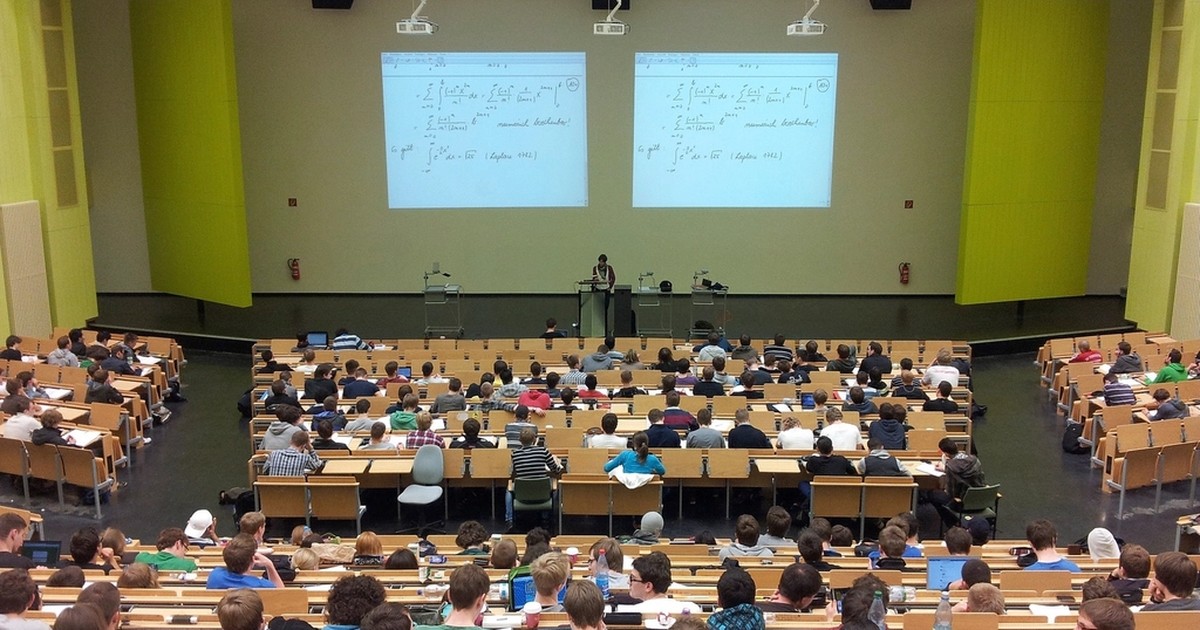
Those students are the ones placing the wager. A senior who picks an AI major this year graduates in 2030, into a labor market nobody can forecast with confidence. I call it the four-year bet: a college asks a young person to spend 4 years of life on a curriculum written for a field that changes faster than most course catalogs were designed to change.
Why colleges are moving now
The demand is real. MIT launched its AI and Decision Making major in fall 2022, and according to the registrar it now has 354 students, making it the second-most popular major on campus. Bentley University started its AI major in fall 2024 and has nearly 100 undergraduates in it this year. Bentley's president, Brent Chrite, told WBUR that people were “a little skeptical, not quite sure” when the school began. His reason for moving anyway is worth reading twice.
“We worry about students from other universities who might be better trained in AI.” Brent Chrite, President, Bentley University
Massachusetts alone has 7 state universities with AI majors and 10 with minors or concentrations, and Suffolk University and Endicott College begin their majors next year. Zack Mabel, interim director of Georgetown University's Center on Education and the Workforce, described the pressure on institutions in plain terms: “They need to get students in seats at their institution.” Enrollment keeps a college's doors open, and a program whose name matches what families search for is a sensible response to that reality.
The programs named in WBUR's reporting sit at very different stages.
| Institution | AI major start | Size or design reported |
|---|---|---|
| MIT (AI and Decision Making) | Fall 2022 | 354 students; second-most popular major on campus |
| Bentley University | Fall 2024 | Nearly 100 undergraduates this year |
| WPI | Offered now | 11 focus areas; required responsible AI course |
| Suffolk University and Endicott College | Next year | Majors begin next year |
The name on the major matters less than the rewrite schedule
A major called AI tells a 17-year-old what the brochure says. What decides whether the bet pays off is how often the curriculum underneath it gets rewritten. Most degree programs were designed for revision every few years, which worked when the core of a field held steady for a decade. In AI, the half-life of skills is shorter than a single degree, and a tool a first-year student masters in 2026 may look dated by the time that student starts a senior project. I call this curriculum half-life, and it is the number I would most like every AI program to publish. It runs through most of my work on AI in education.
The strongest programs seem to know this, and they are aiming below the tools. “Our goal is not to teach them to be users of [generative] AI,” MIT's Antonio Torralba told WBUR. Northeastern's Felix Muzny put the aim directly: “We are training people to be engineers of AI systems.” Products turn over every few months, while the mathematics and the habit of testing a model's output age far more slowly. Bentley assistant professor Ahmad Aljanaideh made a related point: “AI in its essence is very multidisciplinary, so it's not tied to one field specifically.” A finance student or a nursing student who learns how these systems work inside their own field may hold a stronger hand in 2030 than one who learned a stack of tools in isolation.
Ethics is the part of the curriculum that lasts
A Northeastern study in May looked at 66 institutions with an AI major and found that more than a third require an ethics course. WPI, whose AI bachelor's degree has 11 focus areas, requires a course in responsible AI, and WPI's Elke Rundensteiner calls that requirement “critical.” I agree with her, for a practical reason as much as a moral one. The tools a student learns will likely be replaced before their first promotion. The judgment about when to trust a model, and who answers for it when it is wrong, will still be in use at their retirement party.
I describe this work as staying Above the Algorithm: judgment, taste, trust, and accountability, the parts of a job that still need a person. A required ethics course is the cheapest insurance a program can buy against a degree that expires on schedule.
What employers should ask of the class of 2030
The enterprise leaders who will hire these graduates have a stake in the bet too, and real influence over how it turns out. A capstone project sponsored by a working company, or a practitioner who sits on a program's advisory council, is how current practice gets into a syllabus between formal revisions. When the class of 2030 arrives, the useful interview question will be what a candidate had to relearn during school, and how they did it. A transcript lists courses. The answer to that question shows whether the person can keep up after the courses run out.
The bet belongs to the student
I wrote last week about a university making the same kind of wager on AI agents, and the same test applies there: how quickly can the institution revise what it teaches?
Watch any family at a kitchen table this fall with a stack of college brochures, and you will see the four-year bet up close. The parents are trying to read a job market 4 years out. The student is trying to pick something that will still matter. Neither of them can see 2030, and nobody running an AI program can either. That uncertainty is shared, and it is survivable, provided the program is built to keep learning alongside the student.
In my forthcoming book, The Great Relearning, I argue that the capacity to relearn is the most durable asset a person can own. A degree program can teach that capacity directly, or it can hand a graduate a set of skills with an expiration date and a diploma that does not mention one. Which of those this year's wave of AI majors delivers depends on decisions colleges and employers can make during this academic year.
If you lead an AI program, when was a course last rewritten, and what prompted the change? I'm taking that question into my own conversations with campus leaders this year; borrow it. And if you are a parent or a student comparing programs, ask the admissions office the simplest version: how did this curriculum change between last year and this one?
How can a student tell whether an AI major is built to stay current?
An AI major built to stay current should be able to show how its courses changed in the last year or two, beyond simply listing them. Students and parents can ask an admissions office or department chair for a recent example of a course that was rewritten and who asked for the change. Programs that teach how AI systems work, paired with a field where students apply them, tend to age more slowly than programs centered on specific software products.
Does an AI minor or concentration make sense instead of a full major?
An AI minor or concentration can make sense for students whose main interest lies in another field, such as finance or health care. Pairing a major in an applied field with AI coursework lets a student build judgment in that domain, which is the part of the work hardest to automate, while still learning how the systems function. The trade-off is depth: a minor usually covers fewer technical courses, so students who want to build AI systems may still need the full major.
What should employers look for when hiring AI graduates in 2030?
Employers hiring AI graduates in 2030 should look for proof that a candidate can keep learning after the coursework ends, because the specific tools taught in 2026 will likely have changed by then. Two practical markers stand out on a resume: a completed course in responsible AI, and a project where the student had to evaluate and correct a model's output instead of only producing it. Hiring teams that sponsor capstone projects also get an earlier look at how students handle that kind of work.
Here is what makes Alex a credible voice on this topic: Alex Goryachev is Innovator-in-Residence at Tulane University, the WSJ-bestselling author of Fearless Innovation, and shaped a $1.1 billion innovation portfolio at Cisco. He advises higher education and enterprise leaders on building AI programs that can be revised as fast as the field moves.


