Nevada Just Approved 8,000 Robotaxis. What Happens to the Drivers?

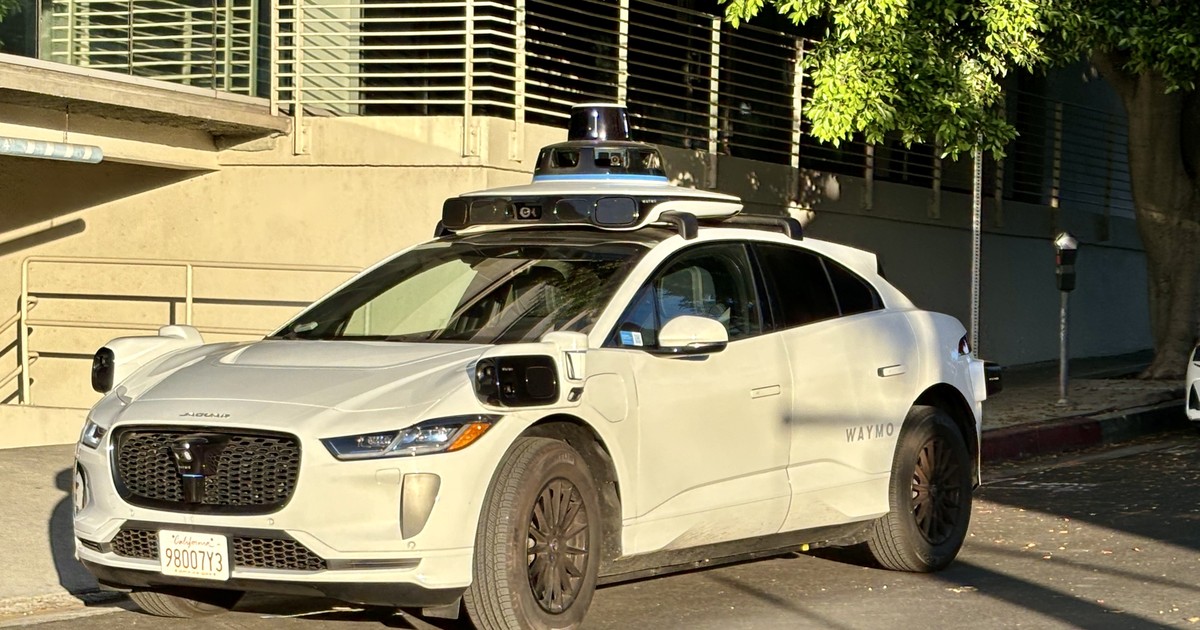
Up to 8,000 robotaxis are now authorized for one Nevada county inside 12 months. Professional driving just had a permit-sized deadline attached to it.
Bring Alex to your organization: keynotes, workshops and advisory, in person or virtual. Check Alex's availability
Nevada just authorized up to 8,000 robotaxis in one county within 12 months. The Nevada Transportation Authority approved that ceiling on Thursday, August 20, in a unanimous vote covering Tesla, Uber, and Waymo across Clark County, which includes Las Vegas. Professional driving is one of the most common skilled occupations in America, and a single regulatory decision just put a delivery schedule on top of it. The retraining side of this carries no equivalent number.
The Nevada Transportation Authority's 8,000-vehicle ceiling
The authorization covers up to 8,000 vehicles across three operators, inside defined districts rather than open-ended county access. Testing and operations run through the Golden Triangle between the airport and Las Vegas Boulevard, downtown, and the Town Square shopping district. Zoox already holds a separate permit for 100 robotaxis in the same county.
Credit where it belongs. Decisions like this usually arrive one company at a time, years apart, in separate proceedings that never quite line up with each other. The Authority handled three operators, a vehicle ceiling, and specific operating districts in one coordinated vote, and that made the market legible to everyone standing in it, including the people who drive for a living. Whatever you believe happens next in Clark County, the workers affected can now read the actual number.
| Operator | Vehicles authorized | Detail |
|---|---|---|
| Tesla | Up to 5,000 robotaxis | Cybercab program; the company describes 5,000 as a ceiling |
| Waymo | Up to 1,000 autonomous vehicles | New Clark County authorization |
| Uber | Up to 1,000 robotaxis | Through partnerships with Motional and Zoox |
| Zoox | 100 robotaxis | Existing permit, held separately |
| Total | Up to 8,000 robotaxis | The Authority's overall ceiling for Clark County over 12 months |
The ceiling arrived faster than the fleet will
"The 5,000 has always been a ceiling for us. I don't think we'll be in a position by this time next year to deploy 5,000 vehicles..." Eric Early, chief engineer, Tesla Cybercab
Take him at his word. Deployment lags authorization in every capital-heavy industry, and autonomous fleets will be no exception. The authorized ceiling still governs the planning, because that ceiling is what operators model against, what lenders underwrite, and what a family-owned limo company in Las Vegas has to assume when it decides whether to buy another vehicle this year.
Watch the Golden Triangle run on a Friday night. Airport to Las Vegas Boulevard, 20 minutes, a full car, luggage, somebody already late for a dinner reservation. Drivers have worked that route for decades. Many of them bought the vehicle, carry the insurance, and pay the plates themselves. The permit leaves this year's work intact. What it adds is a date on the horizon where none existed before, written into a public document any driver can read.
Switchboard operators had a generation. This authorization runs 12 months.
Telephone switchboard operators were once among the largest employers of American women, and automation absorbed the work over roughly a generation. A generation is enough time to finish a career, raise children, or move an entire regional workforce into different work. 12 months is enough time to renew a vehicle registration.
That compression is the half-life of skills, and Clark County is where it becomes checkable rather than theoretical. Driving passengers for money is real skilled work, built on route judgment and a safety record accumulated over years. The half-life on that skill used to be measured in decades. It now has a permit number attached to it.
The drivers' objection deserves a straight answer
The Livery Operators Association, which represents taxi, limo, and gig drivers, opposed the approval on two grounds: workforce displacement and market oversaturation. Both are operating questions, and neither one is nostalgia. Oversaturation is the concern any operator would raise about any market, and it does not become less serious because the new entrants happen to be autonomous.
The same sequence is running across agentic AI generally. The agent absorbs the task, and the skill behind the task loses its market before anyone schedules the retraining. We already watched an AI agent running a retail store reach an employment decision on its own authority. We are already watching agentic deployments outrun the governance written for them. Nevada's vote is the version of that story with a date, a district map, and a number anyone can verify.
The two clocks
I spent 20 years inside a Fortune 100 watching technology transitions land on people who found out late. The pattern held every time. The capital plan had a date. The retraining plan had an intention.
Permit cycles now move faster than program cycles. A vehicle authorization can clear in a single vote. A new workforce credential moves through curriculum design, approval, and a first cohort, and that sequence is measured in years. Both timelines are doing their jobs correctly. They are simply doing them at different speeds, and the person standing between them drives for a living.
That is addressable at the permit level. Nevada has already demonstrated it can coordinate three operators and a 12-month window in one decision. Attaching a workforce-transition question to that same process is a design choice available to the Authority, and the people equipped to answer it quickly, workforce economists and the community college system already training Nevada's workers, are sitting in Clark County today.
If you drive for a living there, the useful move is reading the permit rather than the coverage of it. It names the districts, the ceiling, and the window. That tells you which routes change first and roughly when, which is more than most workers in a technology transition ever get in writing. Take it to whichever training program or association you already trust, and ask what qualifying for different work inside 12 months would actually require. Asking early is how relearning starts.
For everyone reading this outside Nevada, the number worth borrowing is 12. Nevada put a ceiling and a date on the vehicles, in public, in one vote. Ask what date sits next to the skills your own business runs on, and ask it in your next leadership meeting rather than in next year's budget cycle. If your retraining line has money against it but no deadline, you already know which of the two clocks is moving faster. And if you read this one differently, I'm easy to find.
Sources: Nevada Transportation Authority, unanimous permit approval, August 20, 2026 · reporting by TechCrunch, Engadget, Las Vegas Sun, and KOLO TV, August 20-22, 2026.
Will robotaxis take taxi and rideshare driver jobs in Las Vegas?
The Nevada Transportation Authority authorized up to 8,000 robotaxis across Clark County over the next 12 months. That number sets a ceiling on vehicles rather than a schedule for job losses. Tesla's Cybercab chief engineer Eric Early has said the company expects to deploy well under its 5,000 allowance in the first year. The near-term effect on driver earnings depends on how fast each operator puts cars on the road.
How many robotaxis did Nevada approve, and which companies got them?
The Authority approved up to 8,000 robotaxis in a unanimous vote on August 20, 2026. Tesla is permitted for 5,000, Waymo for 1,000 autonomous vehicles, and Uber for 1,000 through its partnerships with Motional and Zoox. Zoox holds a separate existing permit for 100 robotaxis in the same county.
What is the half-life of skills?
The half-life of skills is the interval between learning something well and the market ceasing to pay for it. Nevada's robotaxi vote makes that interval checkable. Professional driving in Clark County now has a vehicle ceiling and a 12-month window attached to a skill that held its value for decades.
Here is what makes Alex a credible voice on this topic: Alex shaped Cisco's $1.1 billion innovation portfolio over 20 years, and he watched those transitions arrive on time for the capital plan and late for the workforce, the same pattern running under Nevada's robotaxi vote.
Bring the half-life of skills to your next leadership event →

.svg)

