State AI testing: New York puts its evidence on campus

New York's new state AI testing center at SUNY Binghamton will help review frontier AI safety frameworks under the RAISE Act, making a university the state's source of evidence.
Key Takeways
- New York's NYCAIRR, announced November 10 at SUNY Binghamton, will independently test frontier AI systems and give public officials objective evidence for AI policy decisions.
- Under the RAISE Act, large frontier AI developers must register with New York by January 1, 2027, and report critical safety incidents within 72 hours.
- The release does not say whether the Center can test unreleased models, so access terms between developers and the state remain an open design question.
Bring Alex to your organization: keynotes, workshops and advisory, in person or virtual. Check Alex's availability
New York has placed its state AI testing program inside a public university. On November 10, Gov. Kathy Hochul announced the New York Center for AI Responsibility and Research, or NYCAIRR, at SUNY Binghamton. According to the governor's release, NYCAIRR is a first-of-its-kind statewide effort with four jobs: independent testing of frontier AI systems, foundational research, training AI safety experts, and giving public officials objective evidence for AI policy decisions. Engadget described it the same day as the nation's first state-run AI testing program.
The design deserves a close read, because a lot of careful work went into it. Interim co-directors Greg Morrisett of Cornell Tech and Jeannette Wing of Columbia University bring private and public universities under one roof hosted by SUNY, and more than 80 New York researchers will work with the Center. The funding is substantial: a $30 million philanthropic gift from donors led by Tom Secunda, announced in January, plus a $25 million initial research investment from SUNY. TechCrunch tallied the total at $55 million in donations and capital.
The law sets the calendar and the Center supplies the evidence
The legal basis is New York's RAISE Act. Large frontier developers must register with the state by January 1, 2027, publish their safety frameworks, and report critical safety incidents within 72 hours. NYCAIRR acts at the State's request, and it will work with the state's Office of Digital Innovation, Governance, Integrity, and Trust, known as DIGIT, to review the safety frameworks developers publish.
The detail I keep returning to is the address.
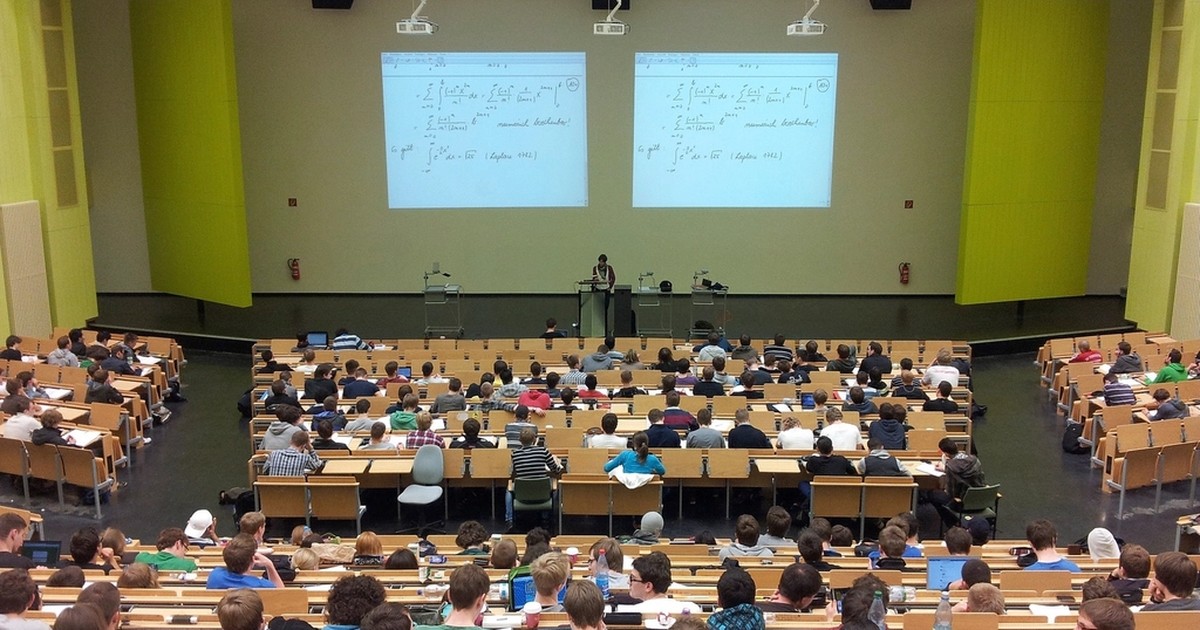
New York chose a university campus as the place its AI evidence comes from.
That choice makes sense to me, because universities can publish what they find, train the people who will run the next round of testing, and sit at arm's length from the companies whose work is under review, which is the kind of independence a public decision needs if people are going to trust it.
Rules written for a slower world need evidence that keeps moving
In my forthcoming book, The Great Relearning, I call this problem rules written for a slower world. Most state legislatures work on an annual session calendar, and for good reason, since deliberation is how the public comes to trust a rule. Frontier AI developers, meanwhile, have been shipping major model updates every few months. Those two clocks will never match, and nobody serious about public trust should want lawmaking to run at the speed of a product launch.
What a state can do is build a standing source of evidence that stays current between sessions. When lawmakers and agency staff sit down to decide something, they can work from findings that are weeks old rather than from a snapshot that was already stale when the last session adjourned. I read NYCAIRR as exactly that kind of mechanism, and I think it is a smart one.
There is precedent for routing a national need through campuses. After Sputnik in 1957, Congress passed the National Defense Education Act in 1958, which put federal money into student loans and graduate fellowships. When a country needs expertise in a hurry, it has a habit of building it at its universities.
Walk through any computer science building late on a weeknight and you will find graduate students running evaluations on models they did not build, looking for the places where those models break. For most of them, that work has ended in a paper or a thesis. In New York, some of it may now reach the people setting policy. Those students are the AI safety experts the Center intends to train, and the material they are learning ages fast. Its curriculum half-life is short.
The open question is what the Center will be able to see
The release names no AI developers or models to be tested. It does not say whether the Center will have access to unreleased models, or how far its testing will extend. Engadget notes that, as described, the program can study only what companies disclose publicly. That is an open design question, and a perfectly normal one for a program in its first weeks of public life.
This is the stage where outside expertise helps most. As Innovator-in-Residence at Tulane University, and before that when I shaped Cisco's $1.1 billion innovation portfolio, I learned that partnerships between institutions and companies hold up when both sides write down the access terms before the first result comes back. The Center and DIGIT are well placed to settle those terms with developers as the program matures.
We have seen institutions take ownership of AI decisions like this before. Look at how Google left AI features off by default and handed the switch to schools, or at banks deciding how far to let AI agents act when the liability lands on them. In each case, the organization closest to the people affected ended up holding the decision.
University leaders now have a new kind of question to answer
If you lead a university, in New York or anywhere else, this announcement changes what a state may ask of you. The questions I am taking into my own conversations with campus leaders are practical ones.
A provost might ask which faculty already do model evaluation work, and whether promotion and tenure reviews count a testing report the way they count a journal article. A CIO might ask whether the campus could host sensitive evaluation work securely, with the data handling a state partner would expect from day one.
If you are a graduate student or an early-career researcher, a new career path is forming in public view, and it runs through your lab. That matters well beyond one campus. A state that can test the technology it regulates gives families and employers firmer footing for the choices they make about AI at home and at work.
You can begin with something modest: a list of the people on your faculty who already do this work.
So here is the question for your next leadership meeting. If your state called tomorrow asking for an independent read on an AI system, whose names would your provost give? I'm easy to find.
Who is responsible for implementing the RAISE Act alongside NYCAIRR?
The Department of Financial Services leads implementation of the RAISE Act. NYCAIRR has a research and review role: it acts at the State's request and works with DIGIT to review the safety frameworks developers publish. TechCrunch reported that a state spokesperson declined to give specifics on enforcement for companies that fail to register.
Where does NYCAIRR get the computing power to test frontier AI?
The Center uses computing power from Empire AI, which the governor's office describes as a $500 million public-private initiative. The release does not say how much of that capacity is set aside for testing.
Here is what makes Alex a credible voice on this topic: Alex is Innovator-in-Residence at Tulane University and, as former Managing Director of Innovation Strategy and Head of Global Innovation Centers at Cisco, shaped a $1.1B innovation portfolio.
Bring Alex to your leadership team to plan for state AI testing →


