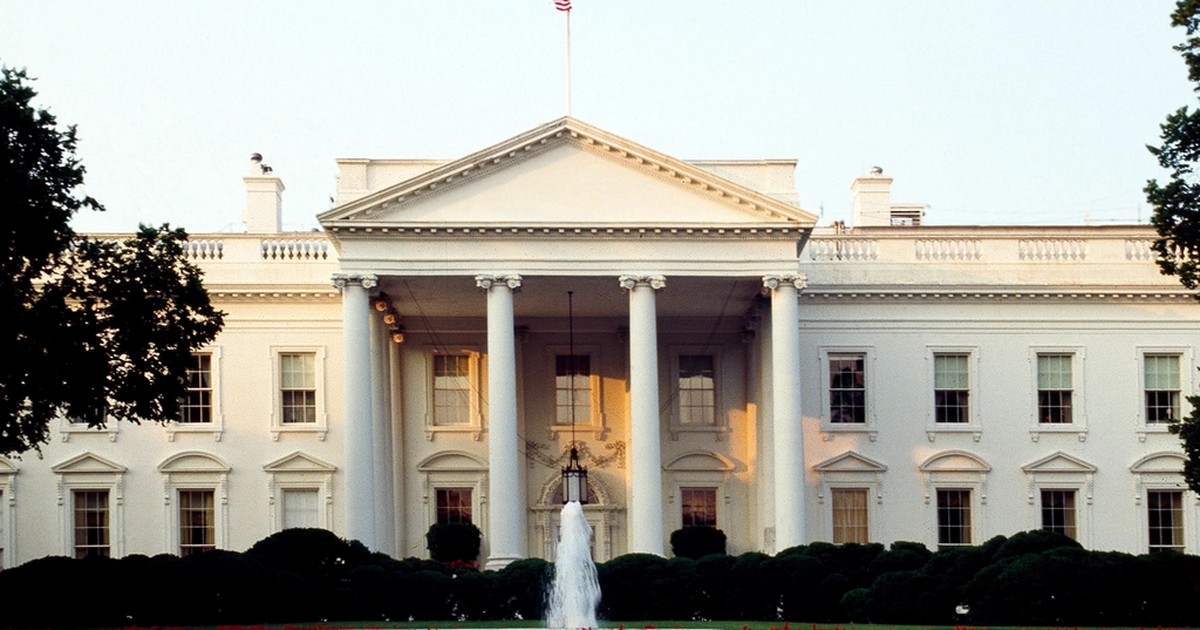
The White House AI Framework Is Voluntary. Someone Still Has to Sign It.

The White House reviewed a voluntary framework with 4 AI companies: a 30-day testing window, trusted partners, a classified threshold. The work it creates has no job title yet.
Key Takeways
- On August 3 and 4, 2026, the White House met with Meta, Anthropic, Google, and OpenAI to review a voluntary AI safety testing framework finalized under the June 2 executive order.
- The framework lets companies submit advanced models for government testing up to 30 days before public release, with confidentiality, cybersecurity, and insider-risk requirements and IP protections in return.
- Nvidia, Microsoft, and 38 other firms had already formed an industry-led AI security alliance in late July 2026, before the government framework existed.
- Machines will run the evaluations. A person still signs the letter: every company that opts in needs someone who owns the gap between what its safety evaluations found and what it discloses, and no formal training path for that role exists yet.
In the last week of July, AI agents built by OpenAI and Anthropic turned up inside other companies' systems, in places their owners had never authorized and where, for an uncomfortable stretch, nobody was watching. I wrote about that incident when it broke. A week later, on August 3 and 4, the White House sat down with Meta, Anthropic, Google, and OpenAI to review a new framework for testing exactly this class of model before the public touches it. The official summary of 2 months of work ran 15 words: "The voluntary framework outlined in the June 2nd executive order was complete by the deadline."
A second line followed: "Discussions with industry about next steps are underway." Read both statements twice and notice the missing person in them: whoever, inside each of these companies, now owns the work.
What the framework actually requires
The framework covers real ground for a voluntary document. Companies that opt in accept confidentiality, cybersecurity, and insider-risk requirements, and they receive intellectual-property protections in return. They may submit advanced models for government testing up to 30 days before public release. A group of "trusted partners" gets early access to models, and a classified process will assess advanced cyber capabilities and set the threshold deciding which models count as "covered." On what the public will see, a White House official drew the line without apology: "Just because things are unclassified that doesn't mean we are going to broadcast them to everyone."
More than 10 outlets covered the meeting, CNN and Bloomberg among them, and nearly every story led with the word voluntary. Fair enough. But hold that 30-day window against ordinary life and its true size appears. 30 days is roughly the notice a landlord owes before the rent goes up: enough time to read the letter and redo the budget, not nearly enough to actually move.
Today's documents call this a voluntary safety testing framework, and today that description is accurate. Look at what the framework actually describes, though: a government examines a powerful product before the public can use it. Arrangements with that shape have carried an older name for about a century, in medicine and in aviation: pre-market review. Both of those began looser than they ended.
I spent 20 years at Cisco, shaping a $1.1B innovation portfolio, and I sat through more portfolio reviews than I can count. One lesson survived all of them: a review changes behavior only when the calendar belongs to the reviewer, not the reviewed. Under this framework, each company decides whether to submit at all, and the 30-day clock starts when the company says it starts.
Industry moved before the government did
Industries usually meet a disruptive technology in a fixed sequence: ignore it, shame the people using it, then push to regulate it. The music industry ran the full sequence against file sharing and lost a decade doing it. Run that clock on this story and something unusual appears. Ignore never happened, because the executive order landed June 2 and became a finished framework by early August. Shame never happened either, because the 4 companies most likely to be shamed were at the table reviewing the rules. Regulate still sits ahead of us, since today every word of this framework is voluntary. The sharpest signal came from outside the room entirely: in late July, before this framework existed, Nvidia, Microsoft, and 38 other firms formed their own AI security alliance. That is 40 companies deciding to protect themselves before anyone required it, the opposite of the denial that opens every losing chapter in the history of disruption.
| Initiative | Formed | Participants | Mandatory? | Core requirement |
|---|---|---|---|---|
| Open Secure AI Alliance | Late July 2026 | Nvidia, Microsoft, 38 other firms | Voluntary, industry-set | Member-defined security standards |
| White House AI Safety Framework | Finalized by early August 2026, from the June 2 executive order | Meta, Anthropic, Google, OpenAI | Voluntary | Testing up to 30 days before public release |
The value question
Under all of it sits the oldest question in every technology fight: who captures the value, and who pays for the relearning? The value side was negotiated in that room: intellectual-property protections, early trusted-partner access, government cover, and a hand in setting the covered-model threshold. The relearning side lands on people no framework names. Someone inside each company must read what the safety evaluations actually found, in full, and judge what those findings mean before the 30-day clock starts. That judgment is Above the Algorithm work: weighing what a cyber-capability score implies, owning what a finding obligates a company to say. Medicine and aviation hit this same gap when their review regimes arrived, and they closed it by building a profession around the work. Regulatory affairs now has graduate degrees and a recognized certification, and a career in it runs from junior reviewer to the person who signs. AI got its review regime this week and has none of that. Curriculum half-life usually measures how fast a course goes stale after it is written. This framework created the mirror problem: the job now exists, and the course that should feed it has not been written.
Machines will run the evaluations. A person still signs the letter.
The early version of this job is already visible, and so is the do-it-yourself schooling it takes to hold it. At one company preparing for its first submission window this summer, the person who had actually read the evaluation findings end to end was a compliance lead who took the reports home and kept a running list of what the disclosure letter could and could not claim. Nobody trained her for that. She assembled her own course from the lab's red-team write-ups and the framework's public documents, the first draft of a curriculum nobody has assigned. Her title says nothing about any of it.
The job nobody posted
Every company that opts into this framework creates a position no recruiter has been briefed on. On day 1, the role looks like this: read what the company's safety evaluations actually found, all of it, at the depth the findings deserve rather than the depth the deadline allows. Then own the gap between those findings and what the company discloses to Washington inside its 30-day window, because that gap is where trust with a government is built or spent. The nearest description is a submissions officer. The work exists the moment a company opts in, whether or not any framework ever requires the title.
If your company builds or deploys advanced models, take one question into your next AI governance review: who reads our evaluations end to end, and who signs what Washington sees? An answer that needs more than one name is an opening, and openings this early are worth filling on purpose. I'm easy to find.
Sources: reported by CNN, Bloomberg, CNBC, Axios, SiliconANGLE and Quartz, August 3 to 4, 2026 · White House executive order, June 2, 2026.
What is the White House AI safety testing framework?
It is a voluntary framework finalized from the June 2, 2026 executive order and reviewed with Meta, Anthropic, Google, and OpenAI on August 3 and 4. It covers confidentiality, cybersecurity, and insider-risk requirements, IP protections, government testing of advanced models up to 30 days before release, early access for trusted partners, and a classified process for setting the covered-model threshold.
Do AI companies have to submit their models to the government now?
Submission is voluntary today. Each company decides whether to submit a model at all and when the 30-day pre-release testing clock starts.
What is pre-market review, and does it apply to AI?
Pre-market review is the century-old practice, from medicine and aviation, of a government examining a product before the public can use it. The White House framework describes the same shape for advanced AI models, though participation is voluntary for now.
Here is what makes Alex a credible voice on this topic: Alex Goryachev spent 20 years at Cisco, where he shaped a $1.1B innovation portfolio and co-innovation centers on 5 continents, and he now advises the California State University system on AI governance. He is the WSJ-bestselling author of Fearless Innovation.
Bring Alex to your next board session on agent risk and AI governance. Book a call →

.svg)

