Korea's top exam scorer used AI. Today 551,864 students sit the CSAT.

The top scorer on South Korea's 63rd tax accountant exam confessed he cheated in both rounds by sending the questions to an AI, and no cheating had been detected before he came forward. Today the country's college entrance exam began under strict device rules, and the harder question is what a perfect score should prove.
Key Takeways
- The top scorer on South Korea's 63rd tax accountant exam confessed to cheating in both rounds by sending photographed questions to an AI, and no cheating had been detected before his confession.
- South Korea's Ministry of Employment and Labor, working with the Human Resources Development Service of Korea, is investigating all national qualification exams held in 2026.
- All 551,864 students sitting today's CSAT had to hand phones, smartwatches, smart glasses and Bluetooth earphones to proctors before the first session.
- Device bans protect a test on exam day, while the four-year bet behind every degree now depends on also measuring whether a person can judge an AI's answer.
Bring Alex to your organization: keynotes, workshops and advisory, in person or virtual. Check Alex's availability
The top scorer on South Korea's 63rd tax accountant exam has confessed that he cheated in both rounds with help from an AI. He photographed the questions with a miniature camera, sent them to an AI and read the answers on a smartphone, according to the Seoul Economic Daily, which reported the confession on November 15. AP puts his results at 397.5 out of 400 on the April multiple-choice round and 663 out of 800 on the July essay. He also said he used the same method in the first round of the certified public accountant exam, and he submitted a confession to the Seoul Metropolitan Police Agency.
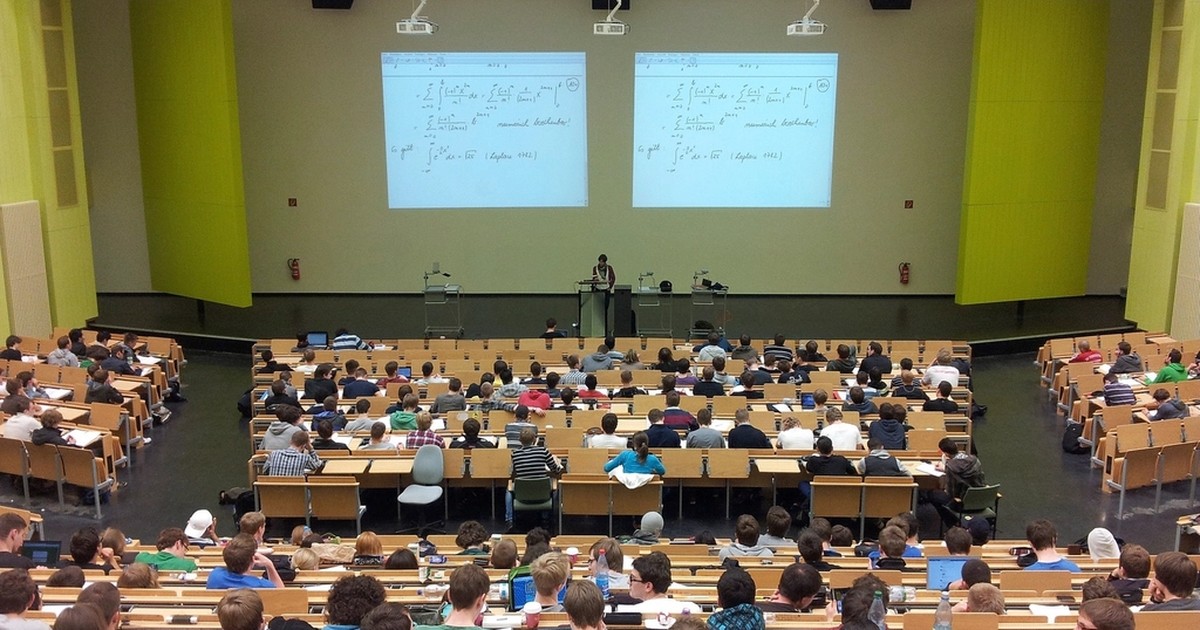
Now, as the exam begins this morning, 551,864 students sit down at 1,312 test sites for the CSAT, the college entrance exam that helps decide where a Korean student will spend the next 4 years. Before the first session, each of them hands phones, smartwatches, smart glasses and Bluetooth earphones to proctors. Officials check every pair of glasses by hand, and students were advised to wear clothing without buttons, as Yonhap and JoongAng Daily have reported.
The case came to light through a confession
The Human Resources Development Service of Korea, which administers the tax accountant exam, had detected no signs of cheating, MTN reported. The case surfaced because the top scorer came forward himself. That detail deserves to stay with every educator and every hiring manager, because it changes what a near-perfect score can tell us. For as long as any of us have been alive, 397.5 out of 400 was strong evidence that a person had mastered the material. Today it is also something an AI can produce for anyone carrying a small camera and a phone.
Every exam is a promise about the future. The tax exam promises clients that a licensed accountant knows the code. The CSAT promises universities that a student is ready, and it promises families that 4 years of tuition will lead somewhere. I call this the four-year bet: a degree or a license is a wager placed today on a job market that keeps moving while the student studies. The half-life of skills keeps shrinking, so the knowledge we certify on exam day starts losing value long before graduation.
Korea is treating trust as the product
The institutional response has been fast and serious. On November 15, the presidential office decided at an emergency meeting to review suspected AI-assisted cheating across national qualification exams. The Ministry of Employment and Labor, working with HRDK, said in a press release that it "will immediately investigate all national qualification exams held in 2026," guided by the patterns of the suspected case. A MOEL and HRDK official stated the goal plainly: "We will focus all our capabilities on restoring the fairness and credibility of state qualification exams."
Education Minister Choi Kyo-jin made the same commitment to today's students: "We will do everything we can to create a fair testing environment that students can trust." Every test site has at least 1 staff member dedicated to smart devices. This is the right instinct, because a credential is worth only what people collectively believe about it, and the agencies protecting that belief are doing the work that keeps a license or an admission letter meaningful for everyone who earned one fairly.
Writing was supposed to ruin memory too
About 2,400 years ago, in Plato's Phaedrus, Socrates tells the story of an Egyptian king who warns the inventor of writing that his gift will plant forgetfulness in the minds of those who use it. Students who lean on written words, the king says, will seem to know much while knowing little. Socrates was partly right, since most of us remember far less than an ancient poet who carried whole epics in his head, and we also built science and the modern university on the tool he distrusted.
Exams have rhymed with that warning ever since. Each generation of tests is defined partly by what it bans at the door, first crib notes and now glasses that can see. The ban protects the measurement on exam day, but it cannot decide what the measurement should be in the first place.
An exam measures what a person can do with what the hall allows. A career measures what that person can do with everything else.
The second test is judgment with the tool in hand
In my years shaping Cisco's innovation work across 14 countries, the people I trusted most could take a confident answer from a vendor or a senior executive and test it. That ability never appeared on any certificate, and it kept its value longer than most of the skills that did.
The top scorer's method shows what a closed-book exam can no longer guarantee. It also points toward what a second kind of test could measure: whether a person can catch an AI's mistakes and stand behind the result. Universities and licensing bodies everywhere will spend the next few years working out how to assess that. Nobody has the answer yet, which means every institution starts from the same line, and the educators and employers who begin the conversation now will have the most to contribute when the work arrives.
Relearning starts at the kitchen table
For the families of today's students, none of this changes the day itself. Today the student needs a calm morning and an empty pocket. The four-year bet gets placed either way. What a parent can do is ask a different question once the scores come back: what did my child learn this year that will still matter when an AI can answer the exam? In most homes, the answer will involve relearning, for the student and for the adults at the table. That is the subject of the book I am writing now, The Great Relearning, and this week in Korea has given it a sharp example.
I'm taking one question into my own meetings this month, and you are welcome to borrow it. If an AI can now pass the test you rely on, what is the second test you would trust?
I write regularly on AI in education, and I'm easy to find.
What happens to a CSAT student caught wearing smart glasses during the exam?
A CSAT student who wears smart glasses during the exam has that exam voided and is barred from sitting next year's CSAT. The penalty makes a single device a high-stakes risk for a student. Because officials are physically checking every pair of glasses at the test sites, students with ordinary prescription lenses should expect their eyewear to be inspected along with everyone else's.
How broad is South Korea's review of national qualification exams?
South Korea's review of national qualification exams covers 528 tests, made up of 491 technical exams and 37 professional exams, according to Korean press reports. A ministry official said investigators will check risk patterns and anomalies using electronic data from the past 3 to 5 years. The Ministry of Employment and Labor carries out the review with the Human Resources Development Service of Korea, following an emergency meeting chaired by Vice Minister Kwon Chang-jun.
Why did South Korea decide against postponing the CSAT?
South Korea's Ministry of Education ruled out postponing the CSAT because, in Education Minister Choi Kyo-jin's words, "Postponing the exam could cause even greater confusion." Vice Minister Choi Eun-ok added that even a delay would have been at most 1 to 2 weeks. The ministry chose to concentrate its effort on the test sites themselves, with device collection before the first session and dedicated smart-device staff in place for this year's exam.
Here is what makes Alex a credible voice on this topic: Alex Goryachev works with educators and executives on how to measure and rebuild skills when every student and employee has the same AI at hand.


