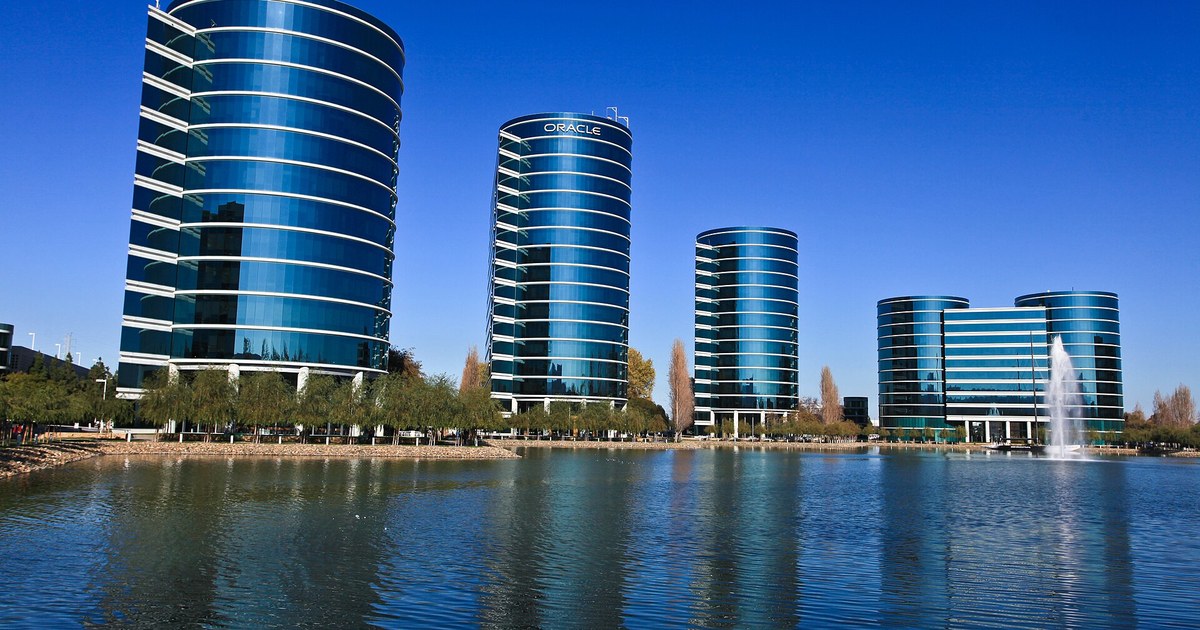
Oracle Layoffs Are Funding a $55.7 Billion Bet Every Competitor Is Also Making

Oracle cut about 21,000 roles in the fiscal year it spent $55.7 billion on AI data centers, and Business Insider reports that another round of layoffs is planned before September 1.
Key Takeways
- Oracle cut about 21,000 roles, 13% of its workforce, in the fiscal year that ended May 31, 2026, the same year it spent $55.7 billion building AI data centers.
- Oracle's severance and restructuring charges rose from $374 million to $1.8 billion in one year, with the full program expected to reach $2.1 billion.
- Every large cloud provider is financing a comparable AI buildout, so the capability that spending buys is becoming standard equipment rather than an advantage.
- Accumulated judgment inside a workforce is the hardest advantage for a competitor to copy, and the one that leaves the building on the day it is cut.
Oracle cut about 21,000 jobs in its last fiscal year, 13% of its workforce, during the same 12 months it spent $55.7 billion building AI data centers. Business Insider reports that another round of Oracle layoffs is planned for August 2026, to be completed before the company's new fiscal quarter begins on September 1.
That second detail deserves to be held loosely, because it rests on unnamed people familiar with the plans and an internal document, and Oracle declined to comment when asked about it. Everything underneath it carries no such qualification, because Oracle disclosed those figures itself in the results for the fiscal year that ended May 31, 2026.
What Oracle's own numbers show
Capital expenditure went from $21.2 billion to $55.7 billion in a single year, while severance and restructuring charges climbed from $374 million to $1.8 billion, with the full restructuring program expected to reach $2.1 billion. Headcount fell from roughly 162,000 to roughly 141,000. To finance the buildout, Oracle raised $43 billion in new debt and another $5 billion from stock sales, and the company expects to raise roughly $40 billion more during the current fiscal year.
| Oracle, fiscal year to May 31 | FY2025 | FY2026 |
|---|---|---|
| Capital expenditure | $21.2 billion | $55.7 billion |
| Severance and restructuring charges | $374 million | $1.8 billion |
| Employees at year end | ~162,000 | ~141,000 |
None of that spending is reckless. Oracle holds a $638 billion cloud backlog, which is customers committing in advance to capacity that has to be constructed before any of it can be sold, and Larry Ellison has pledged 346 million of his own shares as collateral against loans tied to the expansion, a level of personal exposure most executives never accept. This is a company acting on a conviction it plainly holds.
The harder question is what that conviction actually purchases.
The arithmetic every competitor is also doing
Every large cloud provider is constructing the same infrastructure this year, with the same suppliers, for the same enterprise customers. Stanford's 2026 AI Index measured the performance difference between the leading American and Chinese models at 2.7% in March 2026, down from a range of 17.5 to 31.6 points in May 2023. Capability at the frontier converges quickly now, and nothing about the current cycle suggests that is about to reverse. Whatever capability $55.7 billion purchases in 2026, competitors will hold a comparable version of it soon afterward, because all of them are writing the same checks at the same moment. Rented intelligence cancels out. When both parties to a negotiation are using equivalent models, the models stop determining who wins.
Subtract the capability everyone else will eventually own, and what remains is whatever an organization accumulated on its own: the account director who hears hesitation in a customer's voice, and the engineer experienced enough to recognize when a model's answer is confidently wrong. Customer relationships and distribution are difficult to copy as well. Accumulated judgment is the most difficult of all, and it is the one advantage that walks out the door on the afternoon you eliminate it.
After keynotes, the question that finds me is now some version of the same one. Someone with 20 years in enterprise software waits until the audience has thinned out, then asks whether they are the line item financing the AI budget. I spent 20 years inside a Fortune 100 company, where I shaped a $1.1 billion innovation portfolio and encountered this same arithmetic repeatedly: finance the platform, or finance the people who understand what to do with it. The platform always has a slide. The people rarely do.
What 2007 cost Circuit City's best salespeople
In March 2007, Circuit City dismissed 3,400 of its highest-paid salespeople, and they were not the weakest performers. They were the most experienced ones, whose compensation had risen precisely because they were good at the job, and considerably cheaper hires replaced them. The company filed for Chapter 11 protection in November 2008. Many decisions went wrong at Circuit City, and the layoff by itself did not cause the bankruptcy.
Where those salespeople went afterward matters more. Best Buy hired a number of them, and they arrived carrying everything they understood about the customer and about the competitor that had just released them. The savings landed in a single quarter's results, and the accumulated knowledge went to work across the street.
Everyone will have the same AI. Not everyone will have the same people.
Eliminating a position takes a quarter. Rebuilding that quality of judgment takes a decade. One line on the spreadsheet, two clocks running at completely different speeds.
Oracle's $43 billion sits on the balance sheet where any analyst can examine it, and the other obligation appears nowhere at all. When retraining is deferred and experienced people depart, an organization accumulates a learning debt, the compounding cost of capability it decided to postpone, and that bill arrives the next time the technology moves. It will move again in roughly 3 years, and the next transition will require people capable of evaluating what the machines produce. Those people are sitting on the cost line right now.
The Oracle layoffs have never been publicly attributed to AI by the company, which places them alongside two prominent 2026 layoffs that were never publicly blamed on AI either, even as AI-attributed cuts accounted for roughly a third of announced US job cuts in July, according to Challenger, Gray & Christmas. The data on AI-linked job cuts keeps accumulating. What no tracker measures is which companies still employ anyone capable of recognizing when the machine is wrong.
Multiply this decision across a few hundred enterprises and it stops being a corporate finance question. It determines whether a 52-year-old database administrator receives a bridge to her next decade or a severance letter, and whether the productivity AI generates reaches families as longer careers or as additional kitchen-table conversations.
I am not arguing that Oracle should stop building, because the demand is real and standing still carries its own considerable risk. The question worth putting on your own agenda is narrower: of everything we are financing this year, which portion will our competitors also possess by 2028, and which portion leaves the building on the day we eliminate it? That is the question I now open with whenever a leadership team asks me to review its AI plan, and the answers reveal more about a company than the capital expenditure figure ever will. Ask it in your next meeting, before the finance organization answers it for you. If you see this differently, I am easy to find.
Sources: TheStreet, August 12, 2026 (thestreet.com/employment/oracle-layoffs-ai-infrastructure-debt) and Yahoo Finance, August 12, 2026, both reporting Oracle's fiscal 2026 disclosures and Business Insider's report of a planned August layoff round · Stanford HAI, 2026 AI Index Report · Challenger, Gray & Christmas, July 2026 job-cut report.
Are Oracle's layoffs caused by AI replacing jobs?
Oracle has not attributed the cuts to AI performing the work. The disclosed context is a restructuring program running alongside record capital spending on AI data centers, which means the payroll line and the infrastructure line were competing for the same cash. A layoff funded by an AI buildout is a different event from a layoff caused by AI doing the job, and most public trackers count both the same way.
How many people does Oracle employ after the fiscal 2026 job cuts?
Roughly 141,000 as of May 31, 2026, down from about 162,000 a year earlier. Because total restructuring charges are expected to reach $2.1 billion against the $1.8 billion already recorded, that year-end figure may not be the floor. Oracle's current fiscal first quarter runs through August, so any round completed before September 1 would land in that quarter's accounts rather than in the fiscal 2026 results already disclosed.
What should I do if my employer is cutting staff while investing heavily in AI?
Ask what the AI budget purchased for you specifically: training hours, tool access, time to practice. Then make your judgment visible in writing, since the record of a decision where you caught a model's error is the part of your work an agent cannot reproduce. Keep one skill current that requires evaluating output rather than producing it, because that is the capability an organization discovers it needs after the people who had it are gone.
Here is what makes Alex a credible voice on this topic: Alex shaped a $1.1 billion innovation portfolio as Managing Director of Innovation Strategy at Cisco, where the choice between financing the platform and financing the people who know what to do with it was a standing agenda item.
For more, book a conversation →

.svg)

