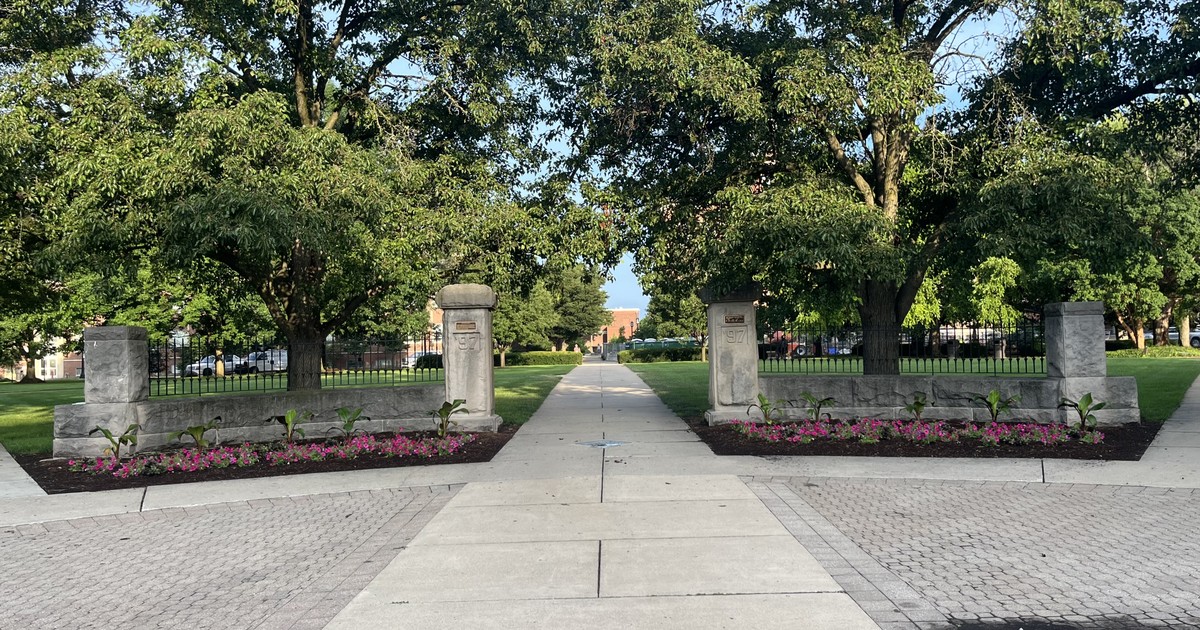
Purdue Made AI a Graduation Requirement. 331 Degree Programs Had to Change.

Purdue's Board of Trustees approved an AI working competency in December 2025, and 331 plans of study had to be rewritten before the Fall 2026 class arrives.
Key Takeways
- Purdue University's Board of Trustees approved an AI working competency graduation requirement in December 2025, affecting 331 academic plans of study for students arriving at the West Lafayette and Indianapolis campuses in Fall 2026.
- Purdue created or modified 22 courses for fall 2026, including a food science course on AI in food processing and a Botany 110 assignment that has students use AI to model flower structures.
- Purdue is designing the requirement to become unnecessary, comparing it to how schools once taught calculator use, and is developing measurement tools to track whether students' critical thinking improves.
- A degree is a four-year bet on a future that keeps moving, and curriculum half-life is now shorter than the degree that contains it.
Purdue University just made AI competency a graduation requirement, and rewrote 331 plans of study to do it. The Board of Trustees approved the "AI working competency" in December 2025 as part of the AI@Purdue effort, and it applies to every student arriving at West Lafayette or Indianapolis in Fall 2026, which is now a few weeks away. Purdue's own framing is that it is the first university in the nation to require this to graduate. Given how slowly AI in higher education usually travels from a committee vote to an actual syllabus, that claim looks safe.
Watch any 18-year-old picking a major this month. They are placing a bet with a four-year settlement date, on an economy nobody can describe past next spring, and their parents are usually placing it with them, with money attached. Students already feel this. A 3-year Babson College study found their dominant worry moving from cheating with AI to losing their own voice. That is the four-year bet, and every institution takes the other side of it: a degree is a wager that what gets taught now will still be worth something when the student walks across the stage. Most universities manage that wager by writing about it in a strategic plan. Purdue changed the terms of the deal instead.
What Purdue actually changed
The requirement is a rewrite of existing coursework rather than one new elective bolted onto the catalog. 331 different academic plans of study are affected, and 22 courses were created or modified to be offered this fall. Food science built a course on AI in food processing. Botany 110 modified an assignment so students use AI to model flower structures. A course called Critical AI Literacy is in development. Reaching into classes students were already taking is the harder path, and the only one that scales past a pilot.
Provost Patrick Wolfe has described the mechanics plainly. Purdue is "looking at some of the older requirements, maybe information literacy, and considering morphing it into something with a more modern twist." Then he named the constraint that decides whether any of this survives contact with a real registrar: "We have to do it in a way that won't constrain people's schedules or add time to graduation."
That sentence is the entire engineering problem. Teach something new, inside a degree that is already full, without adding a semester or another tuition payment. Haley Oliver-Jischke, Senior Vice Provost for Academic and Student Success, described the same problem in the line I expect to hear repeated at every academic conference this year:
"Turn a cruise ship like a jet ski."
Haley Oliver-Jischke, Purdue University
I advise the California State University system on AI, 22 campuses and 460,000 students, and I am Innovator-in-Residence at Tulane. The distance between approving a requirement in December and staffing it in August is where most of these decisions live or die. Faculty have to be trained. Assignments have to be rewritten by the same person who wrote them the first time. Purdue committed to that across 331 plans of study on a calendar measured in months, which is why the number matters more than the announcement does.
The part almost nobody builds in
Here is the piece of this I have not seen another institution attempt. Purdue is planning for the requirement to become unnecessary. Officials have compared it to how schools once taught calculator use explicitly and now simply assume it, and the university is developing measurement tools to track whether students' critical thinking improves over time.
Designing a graduation requirement with its own expiration date concedes something most curricula are built to deny. Curriculum half-life is now shorter than the degree it sits inside. A university willing to say that in public is being accurate, and accuracy is the rarer quality here.
Other institutions are moving the same direction at smaller scale, and the pattern holds across most of what I have tracked in AI in education this year. Ohio State has adopted a comparable AI fluency requirement for undergraduates. Campus, a for-profit online college, requires an applied-AI concentration in every degree it grants. Different constituencies, same conclusion: a graduate who cannot work alongside these tools carries a real cost into the labor market, and the institution helped hand it to them.
Most curricula are written to last. Purdue wrote one to expire.
America has run this play before
This country has retooled its education system on purpose when the economy moved underneath it. Between 1910 and 1940, teenage high school graduation went from roughly 1 in 10 to 1 in 2, and the middle class of the following century was built on it. Nobody called it a workforce program at the time. They called it high school.
The lesson worth carrying forward is that the change was deliberate, sustained across decades, and measured. Purdue's measurement work is the part I would watch most closely, because a requirement nobody can score becomes a checkbox within about three years, and a checkbox teaches nothing.
What this asks of everyone else
If you hire, this story reaches your desk in the fall of 2030, when the first cohort graduates under the new rule. The question worth holding is what those graduates can do on day one that your current new hires cannot, and whether your own onboarding is built to notice the difference. Most job descriptions still describe the workforce that existed when the posting template was written, and the labor market those students are walking into is moving faster than any catalog.
If you work inside a university, the number to carry into your next planning meeting is however many plans of study your institution has, set against how many faculty are funded to rewrite them this year. That subtraction is the whole conversation.
And if you are the parent or the student holding the four-year bet, the reasonable ask is simple. Ask what changed in the curriculum in the last 24 months, and who is responsible for changing it again. An institution that can answer specifically is managing the wager. One that answers with a mission statement is hoping.
Purdue made its bet in public, with numbers attached, and with a plan for the day the bet stops being necessary. Which four-year promise is your institution, or your company, still making on evidence that has already expired? Take that question into your next planning meeting and watch what happens. If you see it differently, I am easy to find.
Sources: Purdue Exponent, August 11, 2026 · Chronicle of Higher Education, "Jagged Intelligence," August 11, 2026 · Forbes (Michael T. Nietzel), December 13, 2025 · The Register, December 17, 2025 · Washington Times, 2026 · University Herald.
Do I have to take an AI class to graduate from Purdue?
If you arrive at West Lafayette or Indianapolis in Fall 2026 or later, yes, though what it looks like depends on your major. The AI working competency was built into 331 existing plans of study rather than as one standalone course, so for many students it arrives inside classes they were already taking, from food science to Botany 110.
Will graduates of an AI requirement actually be more job-ready?
That is untested, and Purdue is one of the few institutions building the measurement to answer it. The university is developing tools to track improvement in students' critical thinking over time. Employers who want an answer sooner should test day-one capability in their own hiring loops in 2030 rather than reading the credential.
What is the four-year bet?
It is the wager underneath every degree: a student commits four years and a large amount of money, and the institution commits its name to the claim that what it teaches will still be worth something at graduation. When the economy moves faster than the catalog, the institution is the one carrying the risk, whether or not it says so.
Here is what makes Alex a credible voice on this topic: Alex advises the California State University system, 22 campuses and 460,000 students, on AI, and is Innovator-in-Residence at Tulane, which puts him inside the exact work Purdue just committed to at scale: turning an approved requirement into staffed courses and rewritten assignments before students arrive.
Planning your own AI curriculum work for the next academic year? Let us talk →

.svg)

